NOTE: If this is the first Musing that you've received in a while, please check to see if they've been going to spam. They are usually sent from jvogelgesang@woodmemoriallibrary.org. You may need to add that email address to your contacts. |
|
|
October 4, 2024 When History is Challenging A Visit to Bavaria |
From Executive Director Carolyn Venne - I'm sharing summer museum reflections again. In 2022 I discussed the visitor experience at museums in Philadelphia and last year I wrote about museum repatriation inspired by the British Museum. This summer, my family ventured to the eastern Alps with a side trip to Munich, once the center of Nazi Germany. |
|
|
First, some quick geography and history of the region. You've heard of Bavarian pretzels? Today, Bavaria is Germany's largest state and is home to a little bit of the Alps and Mad King Ludwig II's castles. It's capital is Munich. But historically, "Bavaria" was a much greater geographic region with a varied history dating back to the Holy Roman Empire. Bavaria is also where Adolf Hitler grew up and the Nazis hid large deposits of stolen art.
Hitler moved to Munich in 1913. There, he founded the National Socialist German Worker's Party in 1920 and attempted a military coup that led to his imprisonment in 1923. Once Hitler was appointed Chancellor of Germany in 1933, Munich became the headquarters for the Nazi Party. |
|
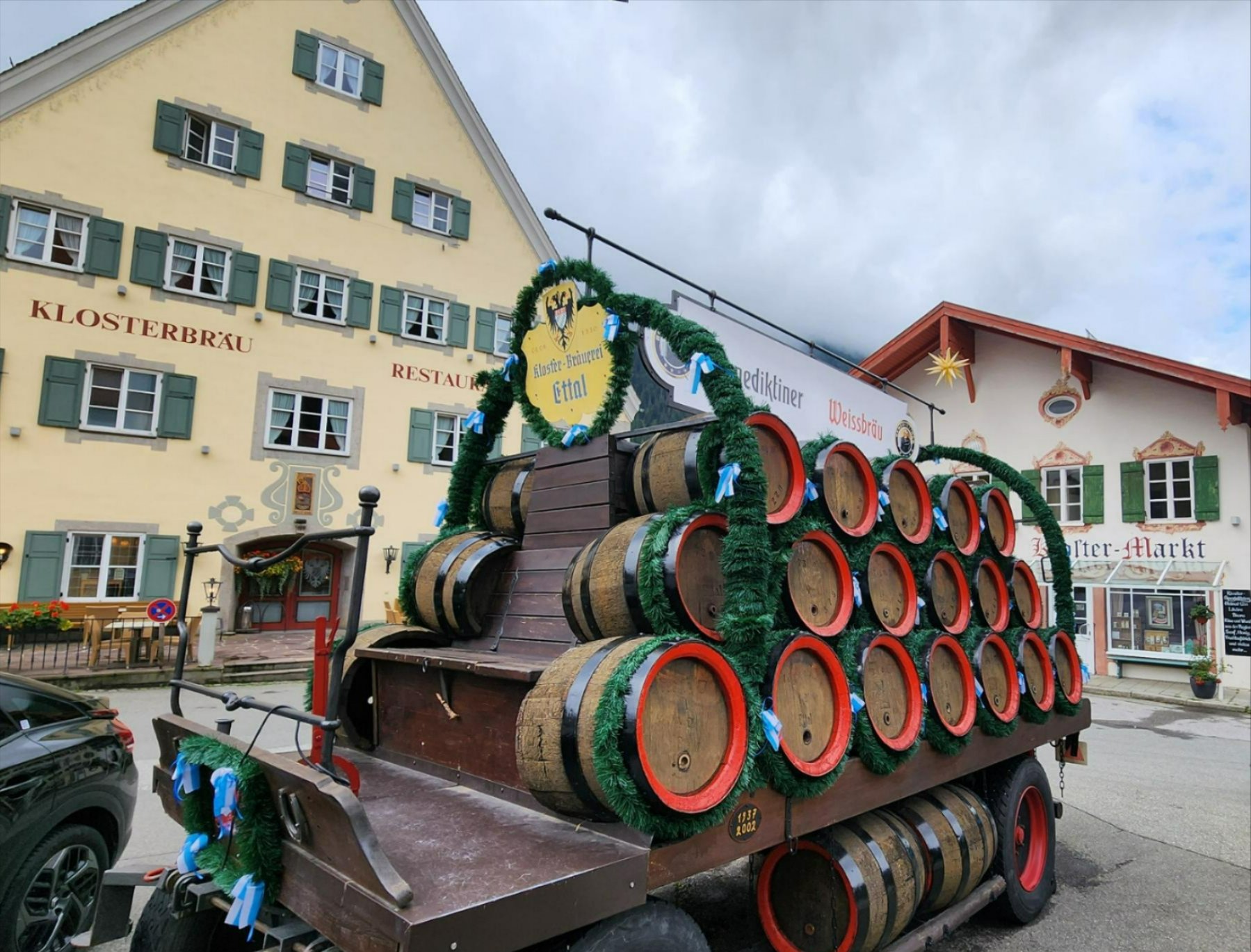
A quick image I snapped in Ettal, Germany in the heart of Bavaria. The light blue and white ribbons are for the Bavarian flag which I generally saw flying as often as German and European Union flags. |
|
|
When I was growing up, I remember being told or hearing that German textbooks largely left out Nazis and the Holocaust in an effort to forget this painful history. I have no idea to what extent that was true. But upon visiting the Munich Documentation Center (more on this below), I was pleased to see that the museum addressed the fact that it did take Germany a while to "become conscious of its special historical responsibility" regarding the Nazi Regime, citing that it was in the 1980s that various initiatives called for a "critical coming-to-terms."
"Blank spots" existed in Munich's landscape because many sites associated with the Nazis were either bombed during the war or intentionally dismantled later, usually by Allied forces. |
|
|
|
One reason for this was so that they would not become pilgrimage sites for neo-Nazis. Another was because the world seemingly felt it important to demarcate the end of the Nazi regime. However, since the late 1990s, many memorials and museums have opened across Germany to bring about increased awareness and education. |
|
|
Memorials and Museums of Today
|
|
|
When we first arrived in the Munich area, we visited the Dachau Concentration Camp. I knew that Dachau was the the first of its kind. But what I learned was that it was built to be more of a prison camp. Yes, many people were killed there or died from the conditions in which they were forced to work and live (or later, experimented on), but it was not designed to be an extermination camp as others were.
Because Dachau was more of a prison camp, a huge network of sub-camps (more |
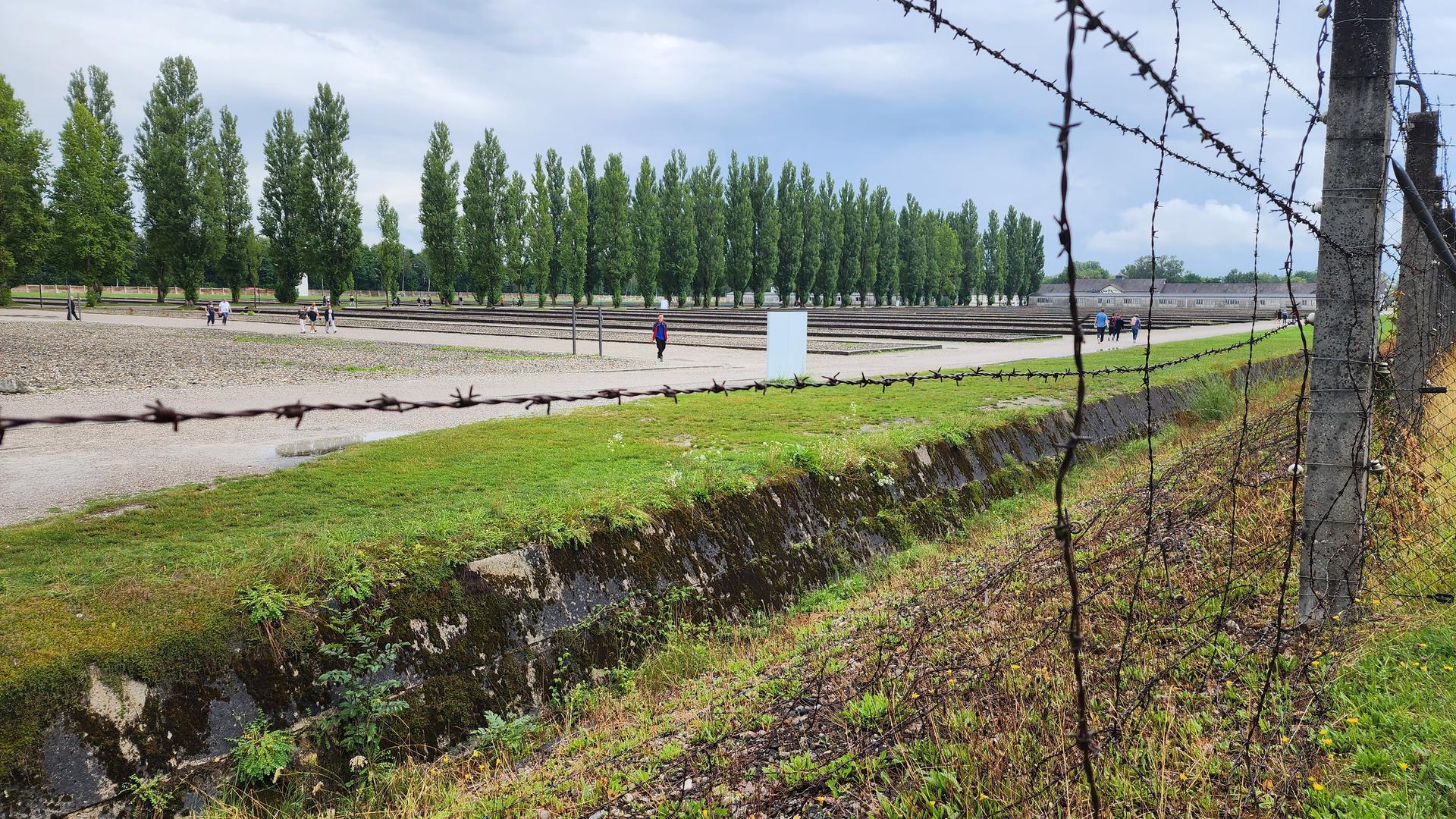
| One of the few pictures I took at Dachau: one side of the camp where 34 barracks once stood. They were torn down in the 1960s. |
|
|
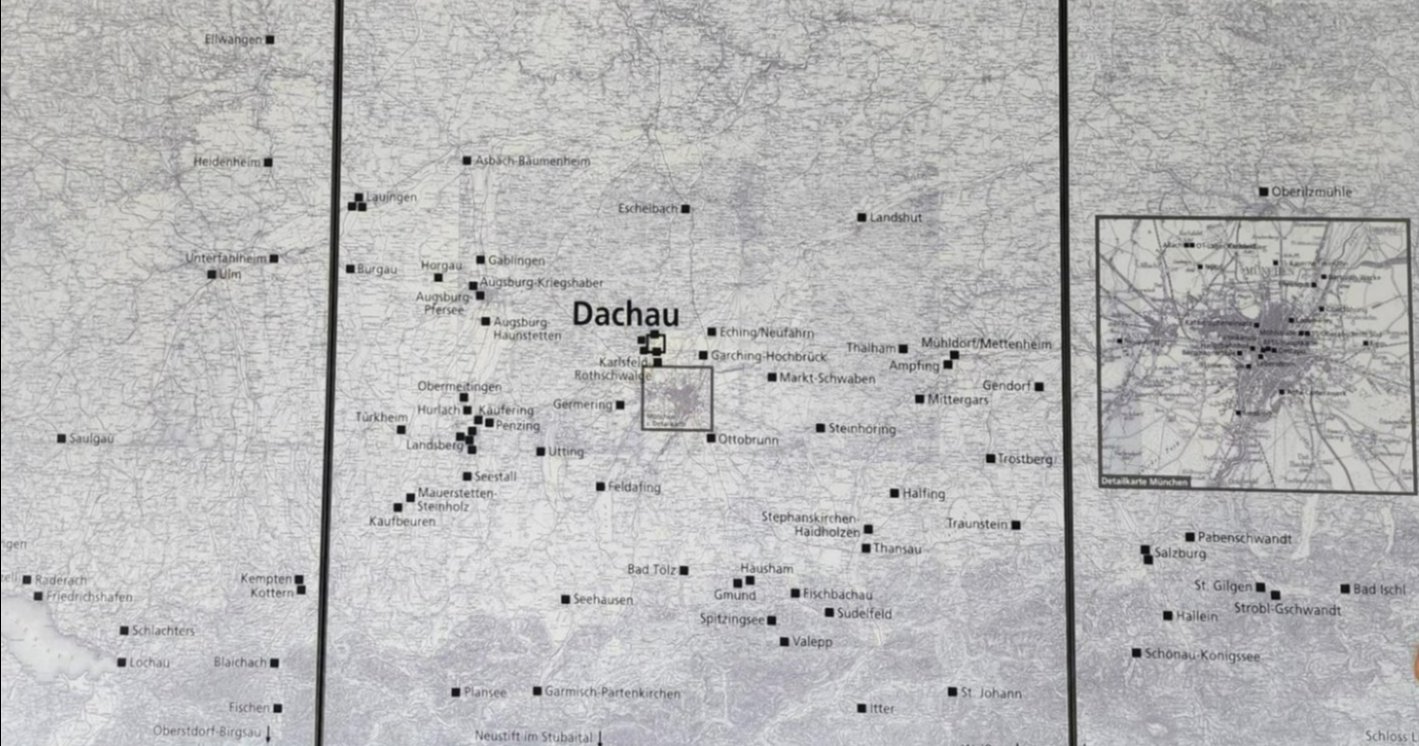
than 100 throughout Bavaria) were developed for the forced labor of prisoners. In some cases, prisoners were hired by for-profit companies involved in the war effort who paid the Nazi Regime for their labor. BMW (which stands for "Bavarian Motor Works" in English) was one example, which created airplane engines during the war. |
| A map inside the museum at Dachau noting various work sites. |
|
|
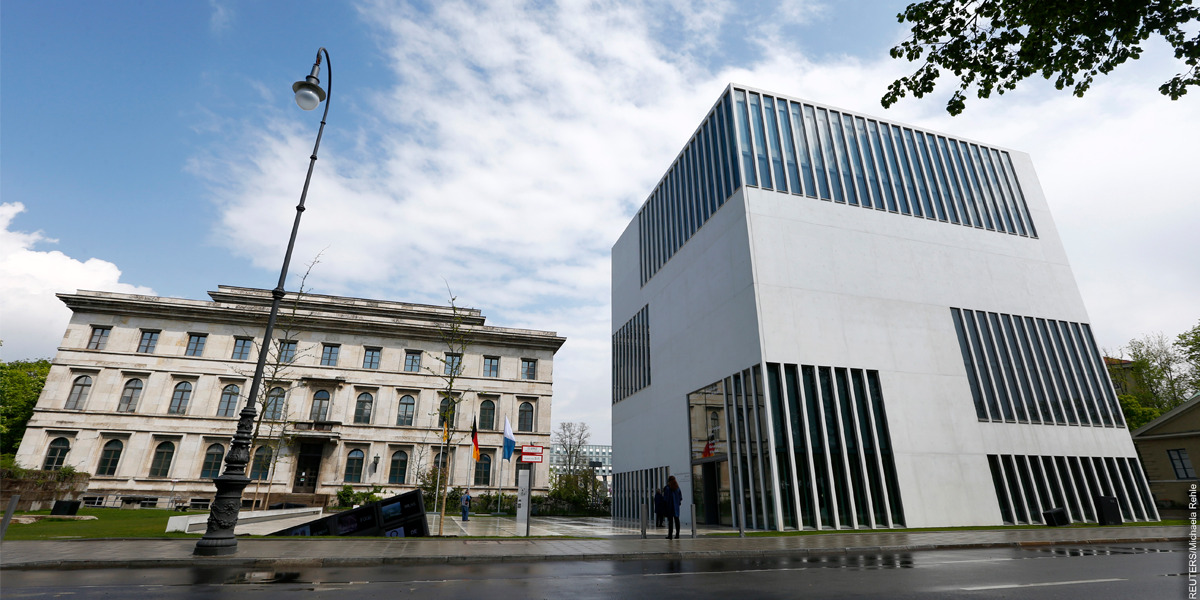
Construction began on the Munich Documentation Center (at right) in 2012 on the site of the "Brown House," the headquarters of the Nazi Party. It was designed with a modern flair as a cube of smooth, light concrete and lots of windows to purposefully contrast with any architectural remains of the Nazi era, such as the Führerbau pictured at left. |
|
We also visited the Munich Documentation Centre for the History of National Socialism, which opened in 2015 and is run by the city of Munich. It was built on the site of the "Brown House," the headquarters of the National Socialist German Workers Party (NSDAP), known as the Nazis. Next door, the Führerbau ("the Führer's building") still stands, built in the 1930s. It contained Hitler's private office and is now home to the Munich University of Music and Theater.
|
|
|
Anerkennen. Aufklären. Verändern. Acknowledge. Elucidate. Change. |
Why are these spaces important, and what do they hope to accomplish? After sharing the history of the Nazi Party locally to Munich, The Munich Documentation Center seeks to respond to these questions in the final exhibit where a huge projector slowly flashes three German words and then their English translations: "Acknowledge. Elucidate. Change." A quote by Jewish-Italian Holocaust survivor Primo Levi is emblazoned on a nearby wall: "It happened, and thus it can happen again."
|
|
|
The museum posits that "the Nazi Party's path to power was not an inevitable, triumphant march." Instead, the Nazis rose to power because "people didn't oppose extremism vigorously enough," citing that following the Great Depression, the Regime "seemed to promise normality, material welfare, safety, private satisfaction...and feelings of belonging." These ideologies became strong and soon the "pressure to conform rose constantly... the result was a racist society." Regardless of what you make of that, the point is that society can't make positive changes unless it understands what went wrong in the past. And you can't build understanding without acknowledgement and awareness. |
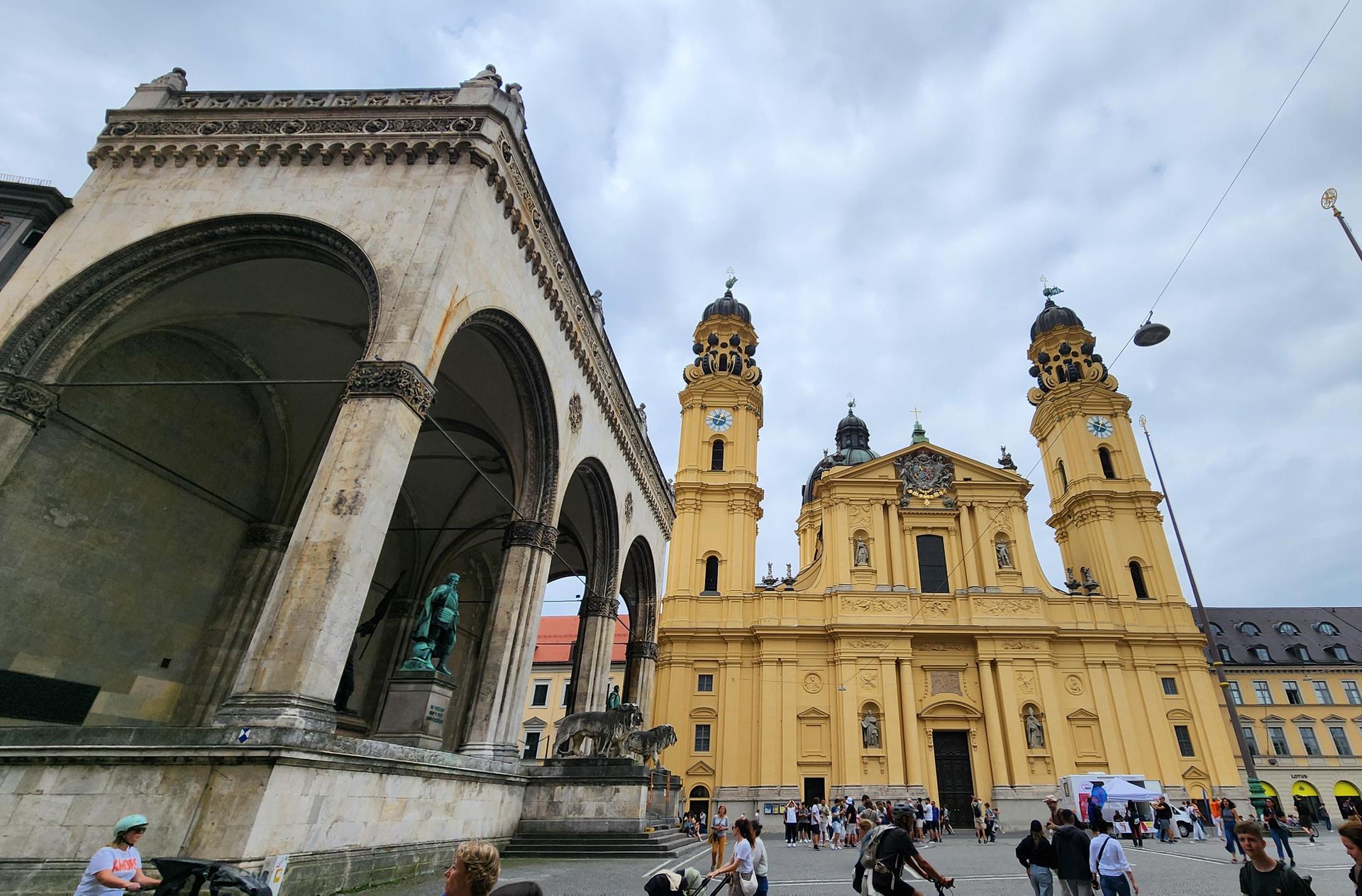
| "Blank spots" can also exist while hidden in plain sight. The Odeonsplatz, a plaza in central Munich, has long been a popular site of public events, including the Beer Hall Putsch in 1923 when Hitler attempted a coup of the Weimar Republic. Every year the Oktoberfest parade route marches through the Odeonsplatz. |
|
|
Challenging Histories are Everywhere |
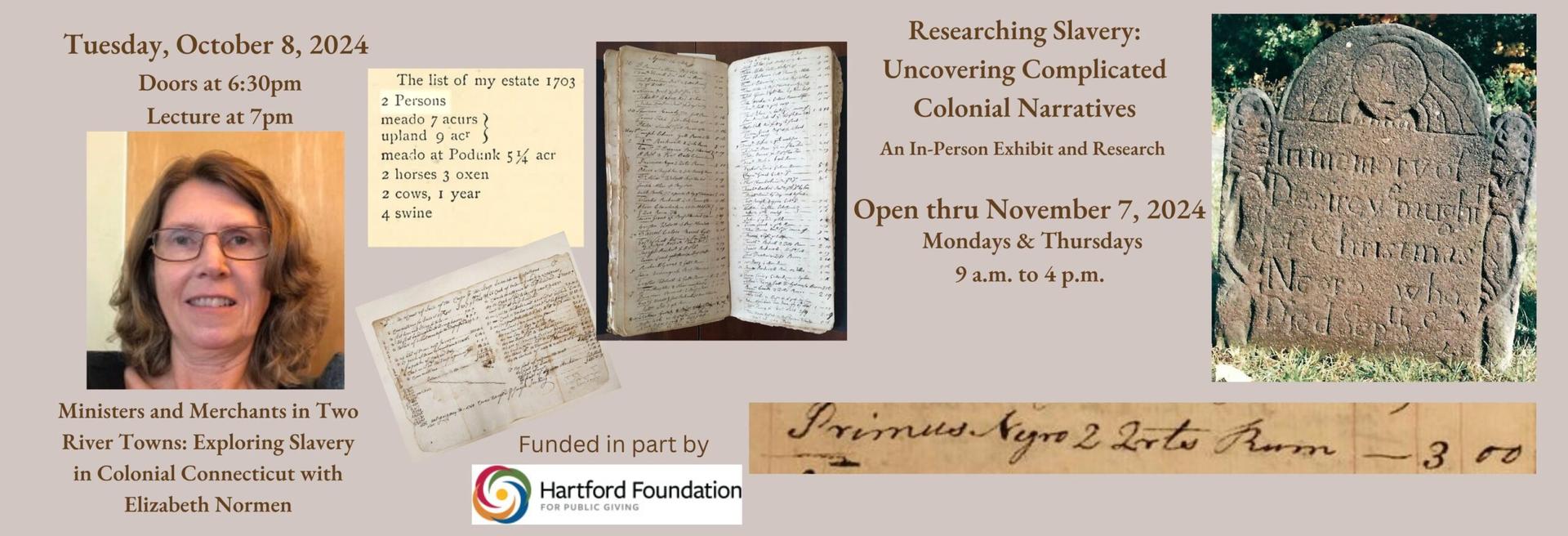
Did you guess where I was going with this musing and what these visits made me think of? Three weeks before my trip to Munich, we opened an exhibit on researching slavery in South Windsor. Visitors have been surprised to learn how much evidence of slavery exists on a local level. The intent of our exhibit is to shed light on a part of America's - and South Windsor's - history in order to raise awareness and set the stage for challenging conversations. Examining challenging histories from a modern perspective can be complicated, but in doing so, we ensure that we have a fuller picture of history so that we may appropriately interpret the world |
|
|
around us.
The Munich Documentation Center wrote: "The forms and content of memory and commemoration continue to be hotly debated in Germany. Nonetheless, there is a basic consensus: Public acknowledgement of the Nazi past serves to educate and orient people today. The past is still important." Are you aware of "blank spots" that may exist not just in your landscape, but also in your knowledge of the past? |
|
This message continuously scrolls along the bottom of the Munich Documentation Center's website. |
|
|
Please forward this email to anyone who might be interested. |
|
|
Our Contact Information
*{{Organization Name}}*
*{{Organization Address}}*
*{{Organization Phone}}*
*{{Organization Website}}*
*{{Unsubscribe}}* |
| Do you enjoy our Musings from Main email series? If so, please consider showing your support by making a donation using the button below. |
|
|
|